Kaith Bridge Encounter
The Legend of William OhThe Kaith Bridge Encounter is the decisive discovery at the center of the mission to destroy the Kaith supply lines. What begins as a cautious scouting operation becomes a confrontation with a living military artery: a bridge carrying corpses and human remains toward the Kaith’s front lines. The encounter changes the party’s objective from locating the target to escaping it alive, while also demonstrating that preparation, information, and terrain can temporarily compensate for a severe difference in strength.
Causes and Mission
Nathan introduces the new Climbers to the Quest as an operation against Kaith logistics rather than a direct battle. The objective is to find and destroy the supply lines moving food toward Kaith forces fighting higher-level Climbers; advancing a civilian Class is explicitly treated as a separate concern. The party therefore enters the cave system under a reconnaissance-and-sabotage mandate, with the expectation that the Kaith warriors are concentrated at the front and that the workers deeper underground will be closer to the danger normally expected on the First Floor.
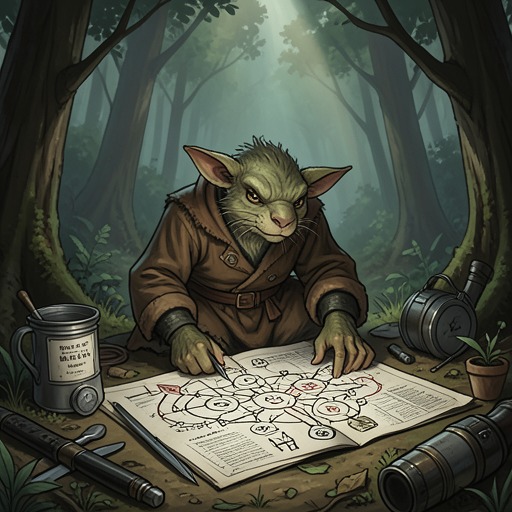
The cavern search is made possible by Loth’s unusual control over insects. A bucket-sized barrel filled with soil and food scraps houses dozens of species, and Loth directs them with ease. He also marks every branch with arrows made from the luminescent juices of crushed glowbugs, creating a navigational trail through the branching tunnels. These small preparations matter because the cave system quickly forces the seven groups to divide, and darkness threatens to turn exploration into disorientation.
Discovery of the Bridge
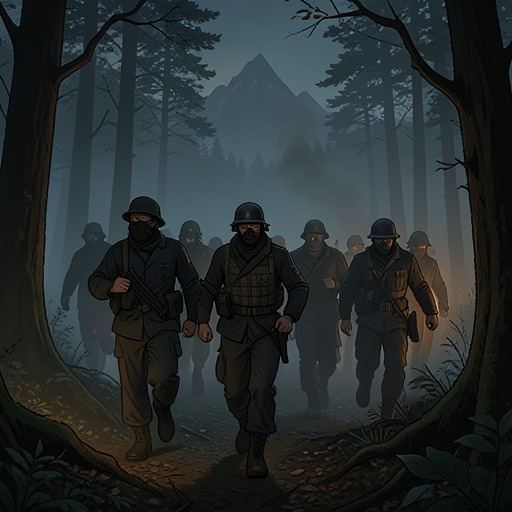
The first warning is not visual but olfactory: Will is nearly ready to end the day when the group catches the scent of trouble. Moving in total silence and following Loth’s glowbug light, they eventually see the bridge. Its surface resembles regurgitated stone mixed with rust, reinforced by organic latticework that arches across the emptiness of the chasm and appears to extend without end.
The bridge is not merely a route but a functioning conveyor of war. Kaith travel across it at full speed, their rotund, insectoid bodies gliding silently past one another. One stream carries rotting First Floor fauna and occasional human bodies, while the other moves empty-handed in the opposite direction. The contrast reveals the supply line’s operating logic: living workers transport biomass toward the front, and the returning flow is not yet loaded. Will identifies the structure as the Quest target, but the recognition brings no immediate victory. It instead exposes how much larger and more organized the enemy’s logistics are than the scouting party had anticipated.
Will reports the bridge to Reggie, Mason Lanover, and June when they catch up. Mason argues for reinforcements, and Will agrees. The group understands that Nathan, the veteran in charge, is meant to spearhead the later assault and hold the bridge while the others determine how to destroy it. Their immediate task is to return to the surface and bring Nathan and the other Parties back the following day, rested and ready. The plan depends on postponement, discipline, and the assumption that the Kaith have not yet detected them.
The Sudden Assault
That assumption collapses when Loth shouts a warning and throws glowbugs down the ledge. Their light catches smooth, rotund chitin climbing directly up the wall toward the party. The encounter therefore turns from reconnaissance into pursuit before the Climbers can withdraw on their own terms. Will’s command is simple and urgent: run. Everyone knows that being slowed on the narrow ledge would allow the Kaith to drag them down one by one and add their bodies to the supplies moving toward the central hive.
June bolts ahead like a startled deer, while Reggie tears away his left pauldron by snapping its leather straps and flings it behind him as he runs. Mason calls for fire against the rear guard. A mote of fire screams past Will, briefly cutting through his night vision before detonating behind him and sending roughly a dozen of the nearest monsters tumbling into the chasm. The blast creates only a momentary opening, but the terrain makes every moment consequential: the ledge is narrow, unstable, and suspended above a lethal drop, so a formation that breaks is in danger of becoming a series of isolated victims.
The fire also reveals a second threat. A Kaith unit is climbing the wall beneath and in front of Mason, preparing to wedge itself between the vanguard and the Nuker. Will responds by using Aspect of the Goat to run across the sheer rock face. He pulls out his tomahawk, sprints above Reggie and Mason, arcs over them, and jumps off the wall, using movement and elevation to prevent the enemy from splitting the group. His action is not a conventional stand at the bridge; it is a mobile intervention made possible by the cliff itself and by an ability suited to impossible footing.
Improvised Defense and Retreat
The party’s escape is supported by more than raw speed. Loth has already prepared a trap, and when a clump of Kaith flows past it, stretchy silk snaps forward and sends the creatures tumbling into darkness. Glittering metal fragments remain lodged in their bodies, and some twitch from septic shock. Loth takes satisfaction in the result, counting almost a dozen victims from a trap assembled in about five seconds. The episode makes the retreat an engineered action rather than a simple flight: glowbugs provide illumination and warning, fire breaks the pursuit, terrain abilities create alternate routes, and improvised traps turn the enemy’s momentum against it.
Will contributes to the same survival network by carrying Loth when the kobold is encumbered by his equipment. He puts the tomahawk handle between his teeth, lifts Loth, and sprints forward to recover lost time. The detail is strategically important because Loth’s tools and insect-controlled methods are essential to the group’s survival, yet his gear makes him heavier than Will expects. The escape depends on preserving the party’s specialists rather than treating every member as interchangeable.
The encounter’s value shift is stark. At the bridge, the group moves from the confidence of having found the Quest objective to the knowledge that direct contact could end in death and conversion into enemy biomass. Their intended return for reinforcements becomes an emergency withdrawal, but the retreat also proves that they can act collectively under pressure. They do not destroy the bridge during this encounter, nor do they defeat the Kaith force outright; they survive long enough to preserve the possibility of a later assault.
Consequences and Significance
The encounter establishes the operational reality of the Kaith conflict. The important target is not necessarily the strongest individual enemy but the route, bridge, and flow that sustain the front line. Nathan’s later role as the veteran spearhead, the need to return with rested Parties, and the party’s refusal to volunteer for a suicidal holding action all define the mission as a problem of logistics and command rather than heroic recklessness.
It also clarifies why the party’s discoveries elsewhere carry strategic weight. The System later explains that reaching the 2nd Floor can be done through established routes or by clearing a Key Site to open an inter-floor Door, with the second method being quick, dangerous, and rewarding. The Kaith Bridge Encounter embodies that same pattern: the dangerous route promises decisive progress, but only if the Climbers understand when to scout, when to withdraw, and how to convert preparation into survival. The bridge is therefore both a physical target and a lesson in the economics of advancement.
In narrative terms, the event is a threshold crossed and immediately resisted. The Climbers find the passage that could alter the campaign, but the discovery does not grant mastery over it. Instead, the bridge’s endless lattice, silent traffic, and cargo of bodies expose a war too large for their first approach. Their retreat preserves the mission while stripping away the illusion that courage alone will be enough. The encounter’s lasting significance lies in that reversal: finding the enemy’s lifeline is not the same as being ready to cut it.